Getting started with Redmine
What it is, what you can do and how to find your way around
AlphaNodes online training, about 6 minutes
What Redmine is
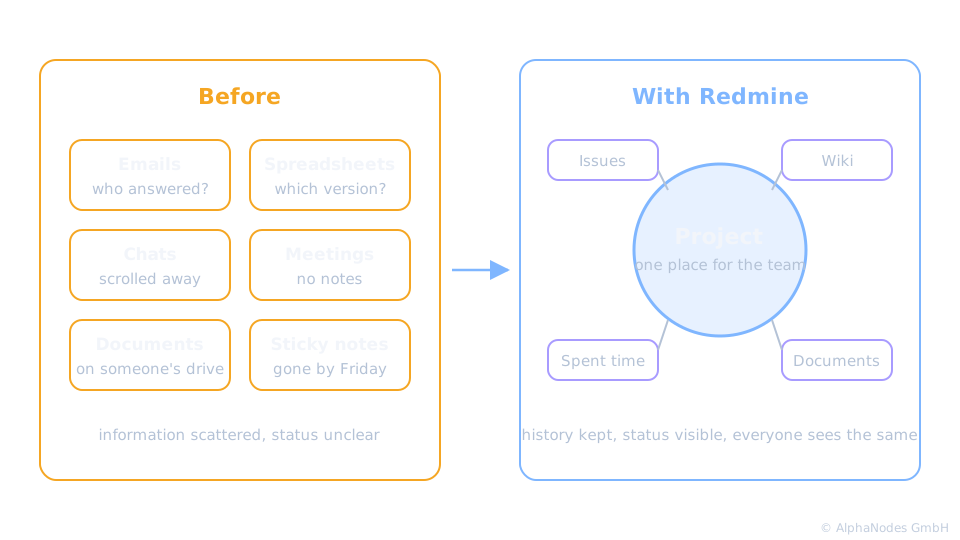
Redmine is a web based tool for managing projects and tasks. The team works in the browser, in one place.
- Open source, used since 2006 by companies of every size
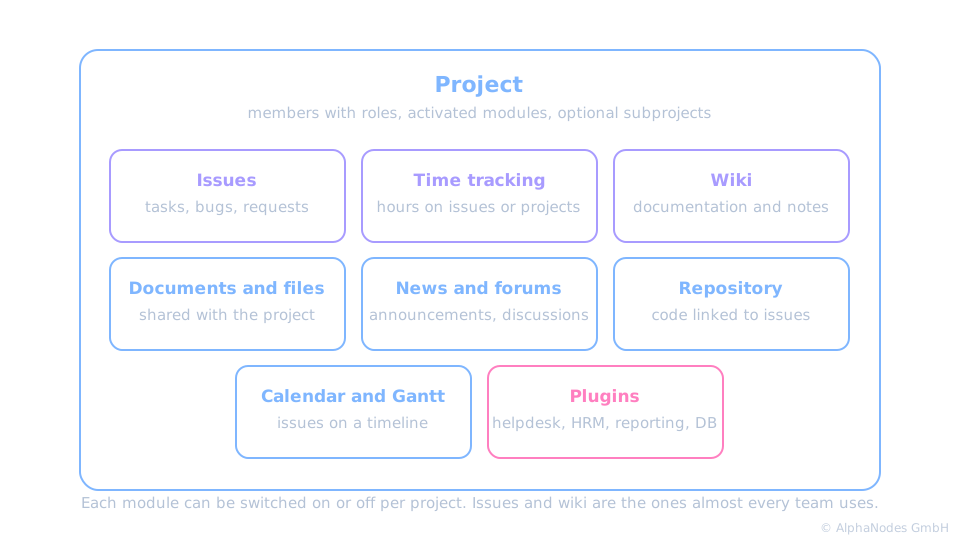
- Projects hold the work, issues track the tasks, everything else attaches to them
- You decide which functions a project uses: issues, wiki, time tracking, documents and more
Before and with Redmine
What a project can contain
Who uses Redmine for what
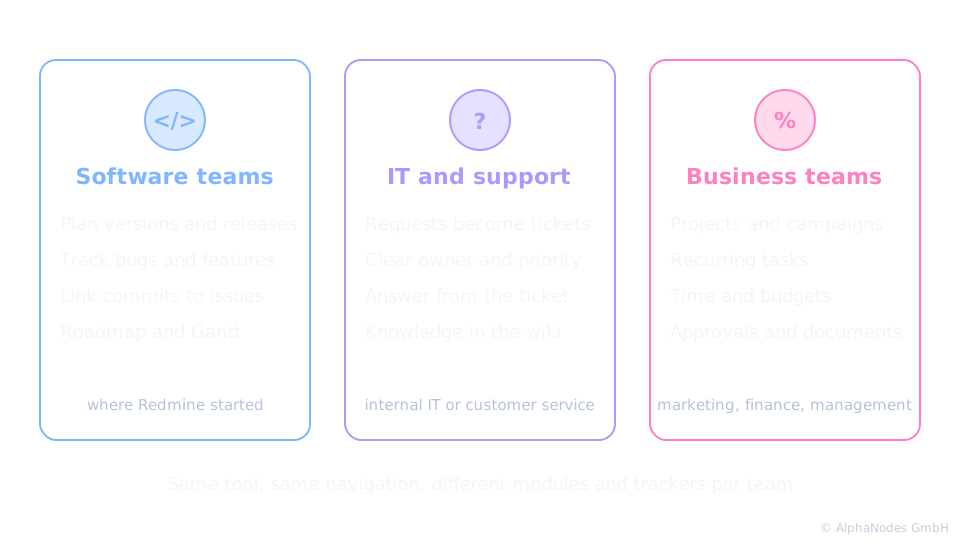
Typical use cases
- Software teams plan, track and release software with issues, versions and repositories
- IT and support teams handle requests and problems as tickets with clear ownership
- Business teams such as marketing, finance or management organise projects and recurring tasks
Redmine started with developers. Today most new installations serve teams outside software development.
What you can do
depends on your role
Roles decide what you see
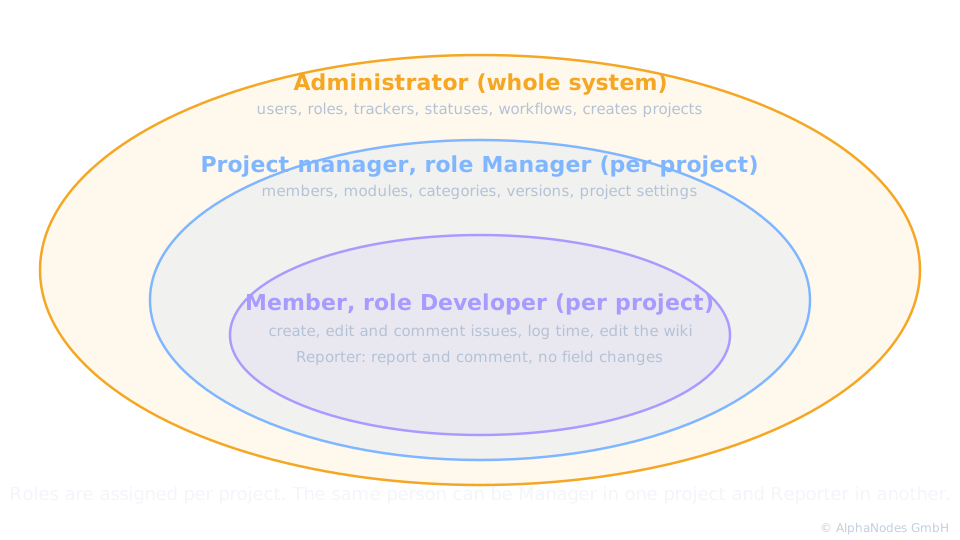
How permissions work
- An administrator sets up the system: users, roles, trackers, workflows
- In each project you have a role, for example Manager, Developer or Reporter
- The same person can be Manager in project A and Reporter in project B
- Menus and buttons only appear when your role allows the action
If something is missing in your Redmine, it is usually a module or a permission, not a bug.
Anatomy of an issue
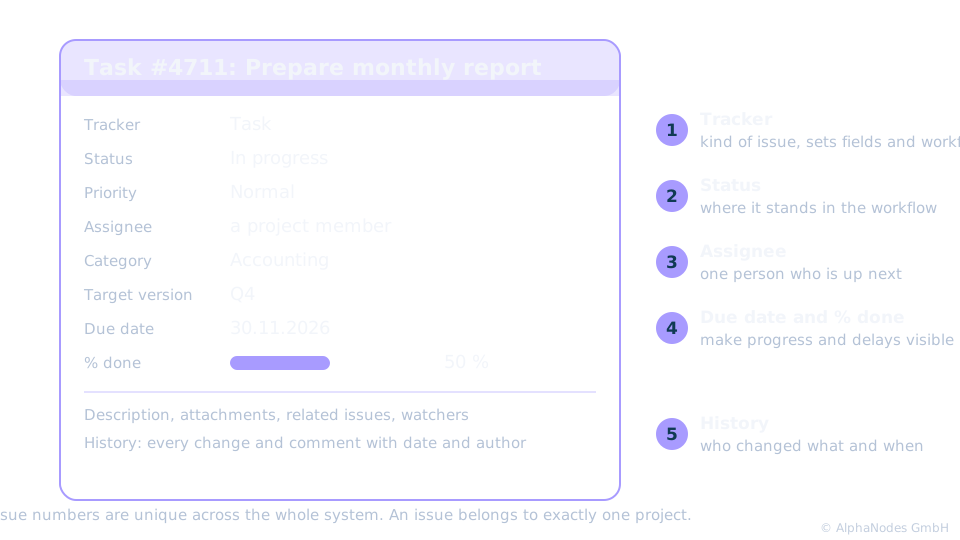
Issues in one minute
- Every task, bug or request is an issue with a number that is unique in the whole system
- Tracker says what kind of issue it is, status says where it stands in the workflow
- Assignee is the one person who is up next, due date makes it visible in time
- Comments keep the history, watchers get notified
Finding your way around
The navigation is the same in every Redmine
The four areas of the screen
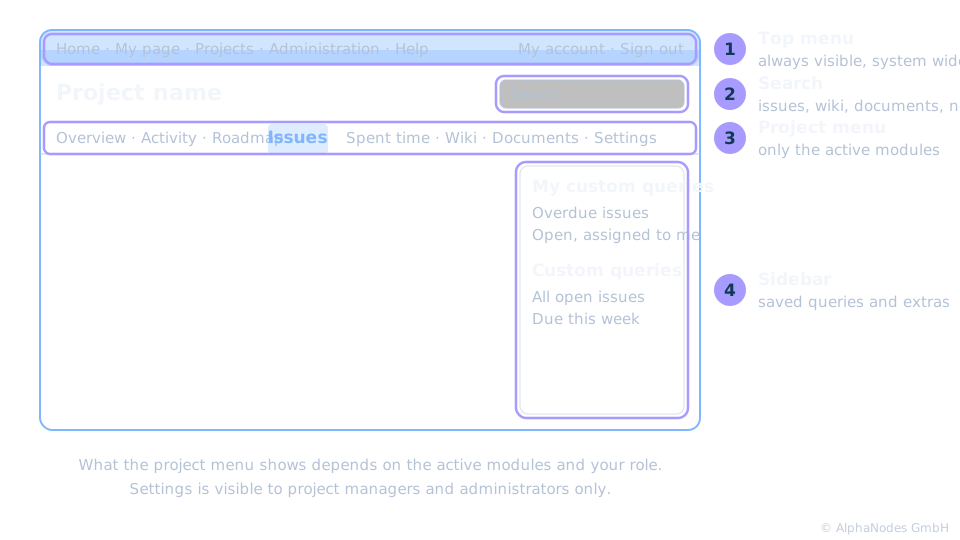
Top menu
- Home: the start page, often a dashboard with what matters today
- My page: your issues, your spent time, your watched items
- Projects: all projects you have access to, with search and filters
- Administration: only for administrators
- Help, your account and logout on the right
Project menu and sidebar
- The project menu lists the active modules: Overview, Activity, Issues, Spent time, Wiki, Documents and more
- Settings appear only for project managers and administrators
- The sidebar on the right holds saved queries and shortcuts
- The search field finds issues, wiki pages, documents and news across projects
In short
One place for the work, a role that decides what you see, a navigation that is always the same.
Your first steps
- Open My account, check your name, email and notification settings
- Open Projects and look at one project: overview, issues, wiki
- Open an issue, read the history, add a comment
- Try the search, then save a filter in the issue list
See it live
Try Redmine with the AlphaNodes plugins in our online demo
Redmine hosting · Back to online training
© AlphaNodes GmbH, all rights reserved