Managed Hosting / Redmine Reporting / Reports and Dashboards
How to work with dashboard reports for Redmine
How many issues are overdue? Who has too much on their plate right now? Are more issues coming in than the team closes? The Reporting plugin answers such questions on the dashboard, on the Redmine start page or in the project overview. The figures come from your issues, time entries and projects and are up to date every time you open the page.
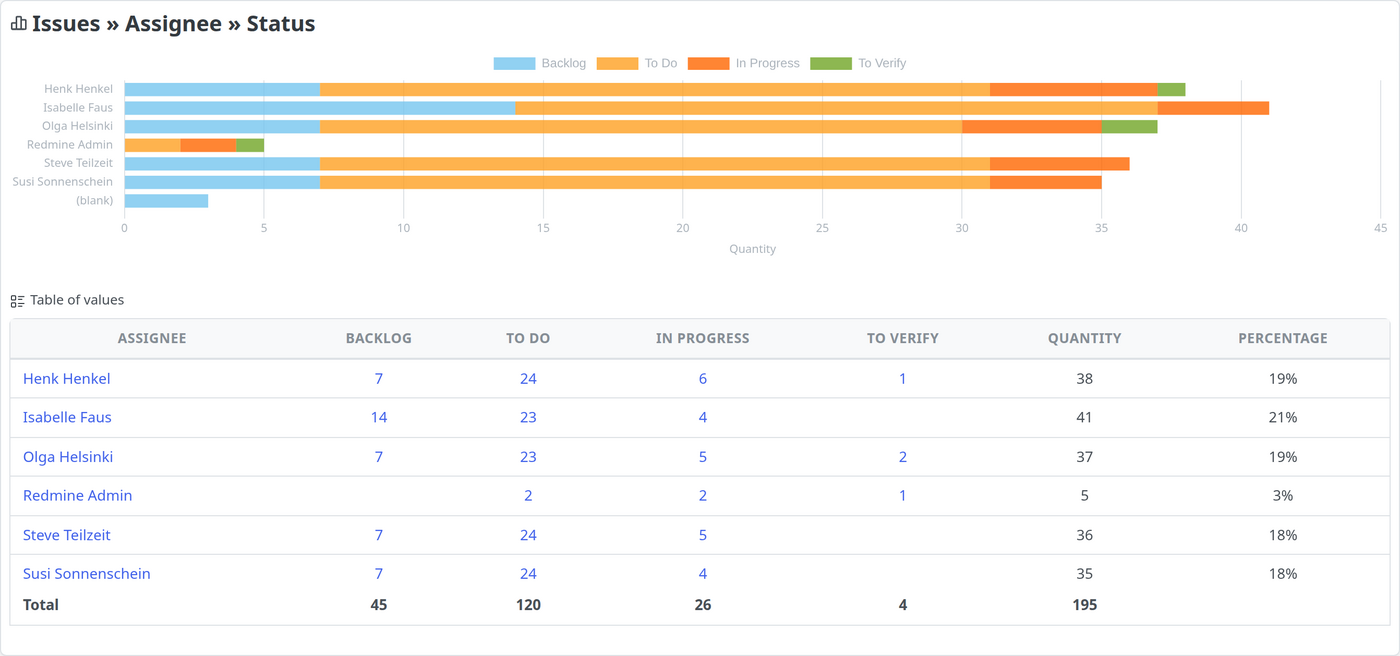
One block, many questions
From version 4.7.0 you set up charts yourself. A chart block evaluates issues, projects or spent time by a field of your choice. For example open issues per person and status, hours of the month per project, or new issues per month by priority.
Every bar and every number in the table of values leads to the filtered list behind it. The chart shows where something stands out, the list shows the issues.
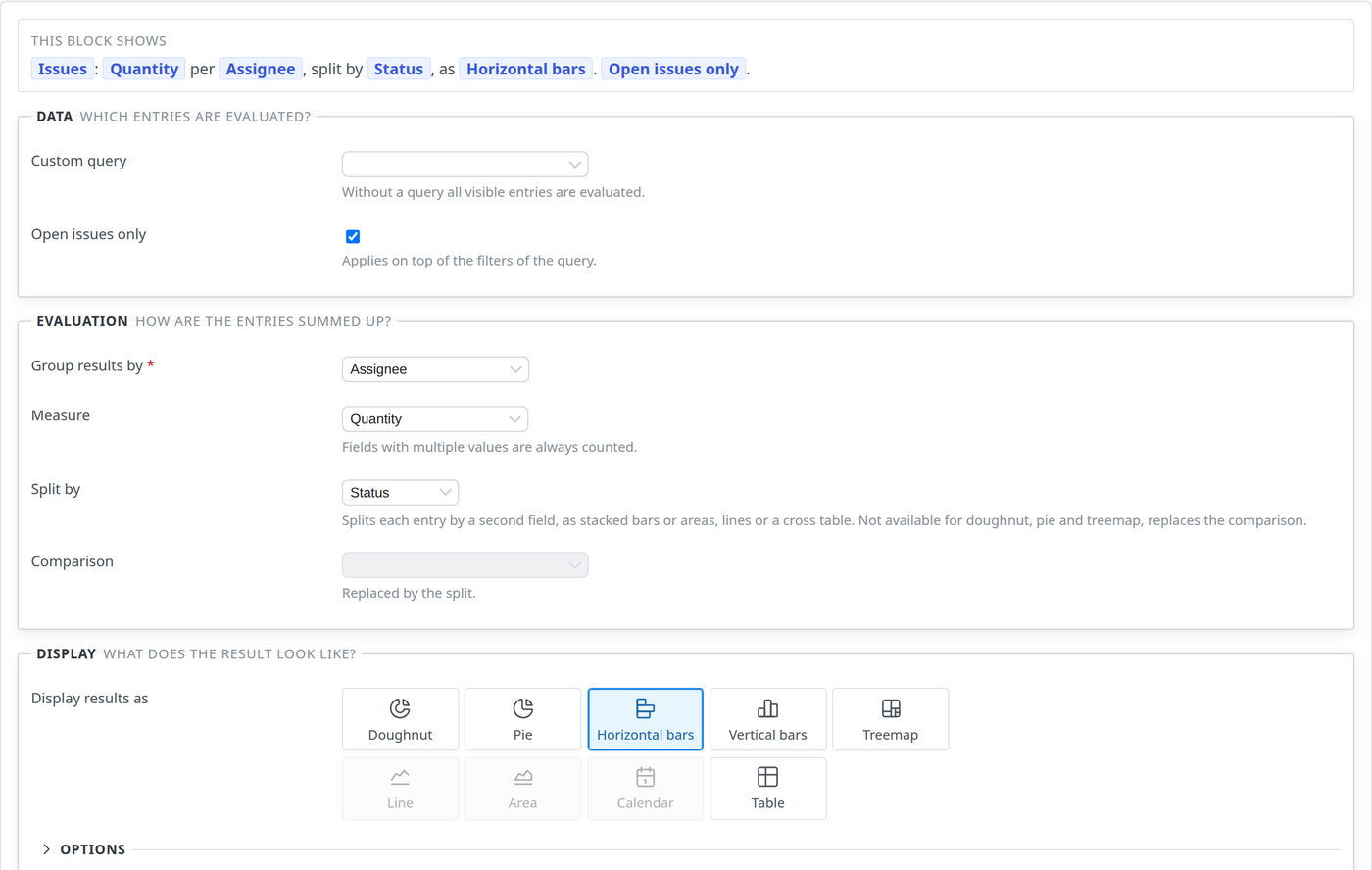
How to set up a block
The settings dialog has four sections:
- Data: a saved query defines which entries count.
- Evaluation: the field to group by, quantity or sum, optionally split by a second field or compared with the previous month.
- Display: doughnut, pie, bars, treemap, timeline, calendar or table.
- Caption: your own title and a description for your team.
At the top of the dialog, one sentence says what the block shows with your settings. Each block type can be used several times on a dashboard.
The most important figures for the monthly report
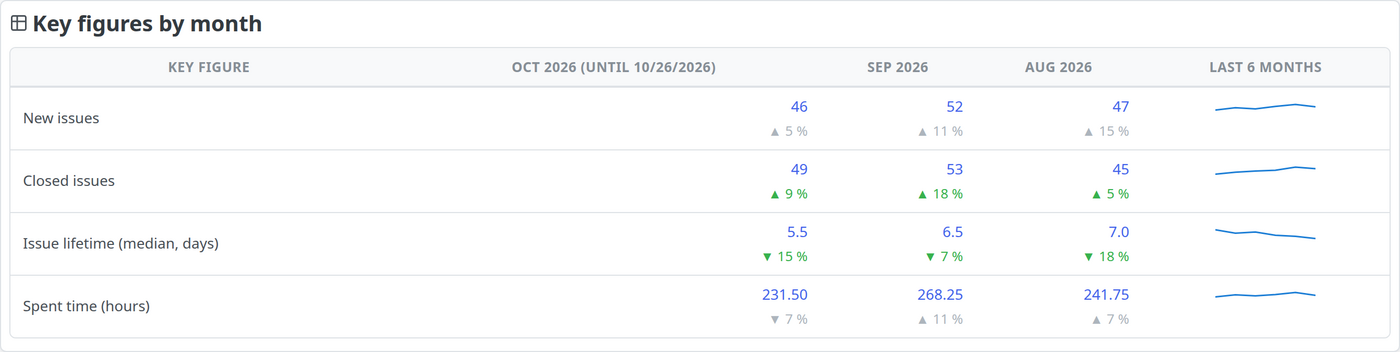
Key figures by month
New and closed issues, issue lifetime and spent time for the current month and the two months before. Below each value you see the change compared with the previous month, next to it the trend over six months. Green means better, red means worse.
A query narrows down the figures, for example to one team or one customer. The block is available from version 4.7.0.
See where things get stuck
Some blocks answer one fixed question and need hardly any settings.
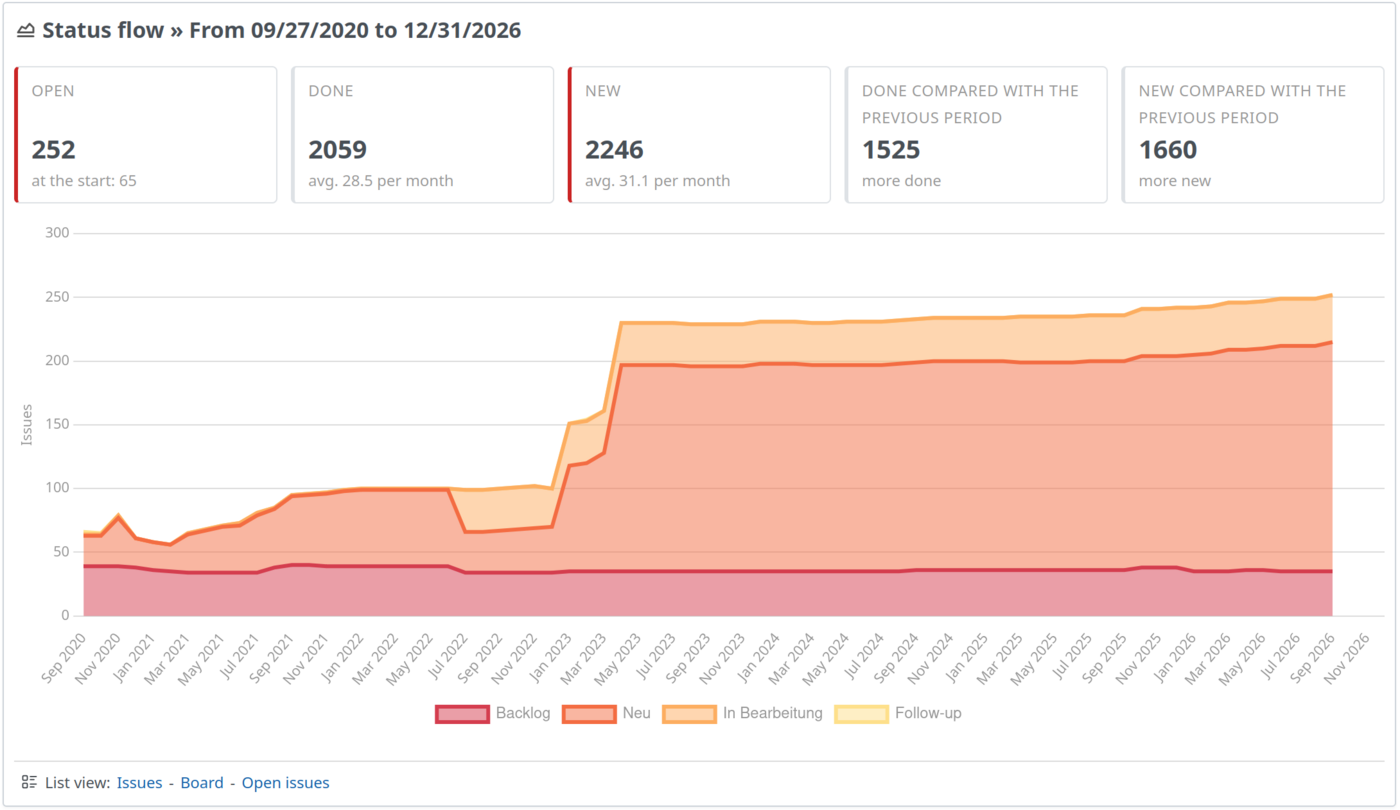
Status flow
How issues are spread across the statuses over time. If an area grows, work is piling up there, for example in testing. From version 4.7.0.
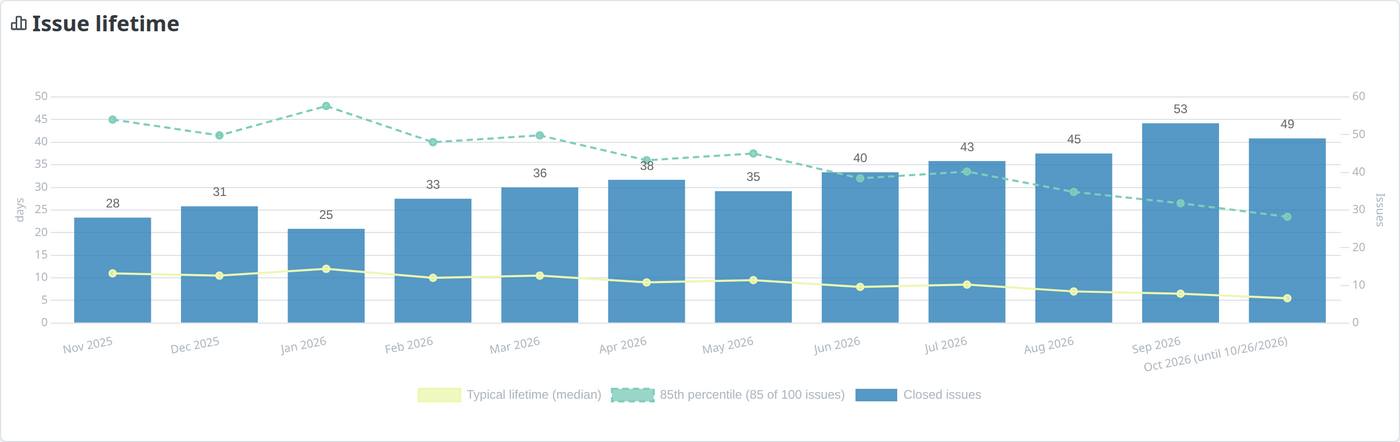
Issue lifetime
How many days issues stayed open from creation to closing, per month or week. This gives your customers a realistic processing time. From version 4.7.0.
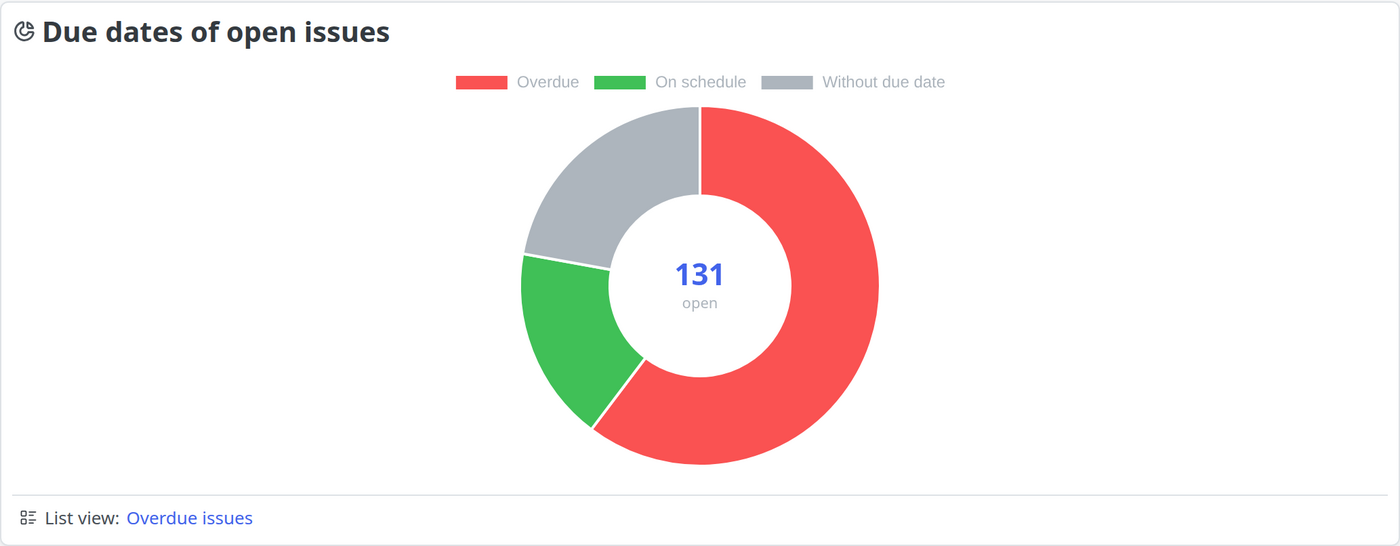
Due dates of open issues
Open issues in three groups: overdue, on schedule and without due date. One click takes you to the overdue issues.
There are also burndown charts for versions and projects, based on issues, estimated time or story points (from version 4.7.0). The block “Estimated time / Spent time” shows whether your team estimates realistically. The due date deviation shows how early or late issues were closed compared with their due date.
Get more out of the issue list and the project list
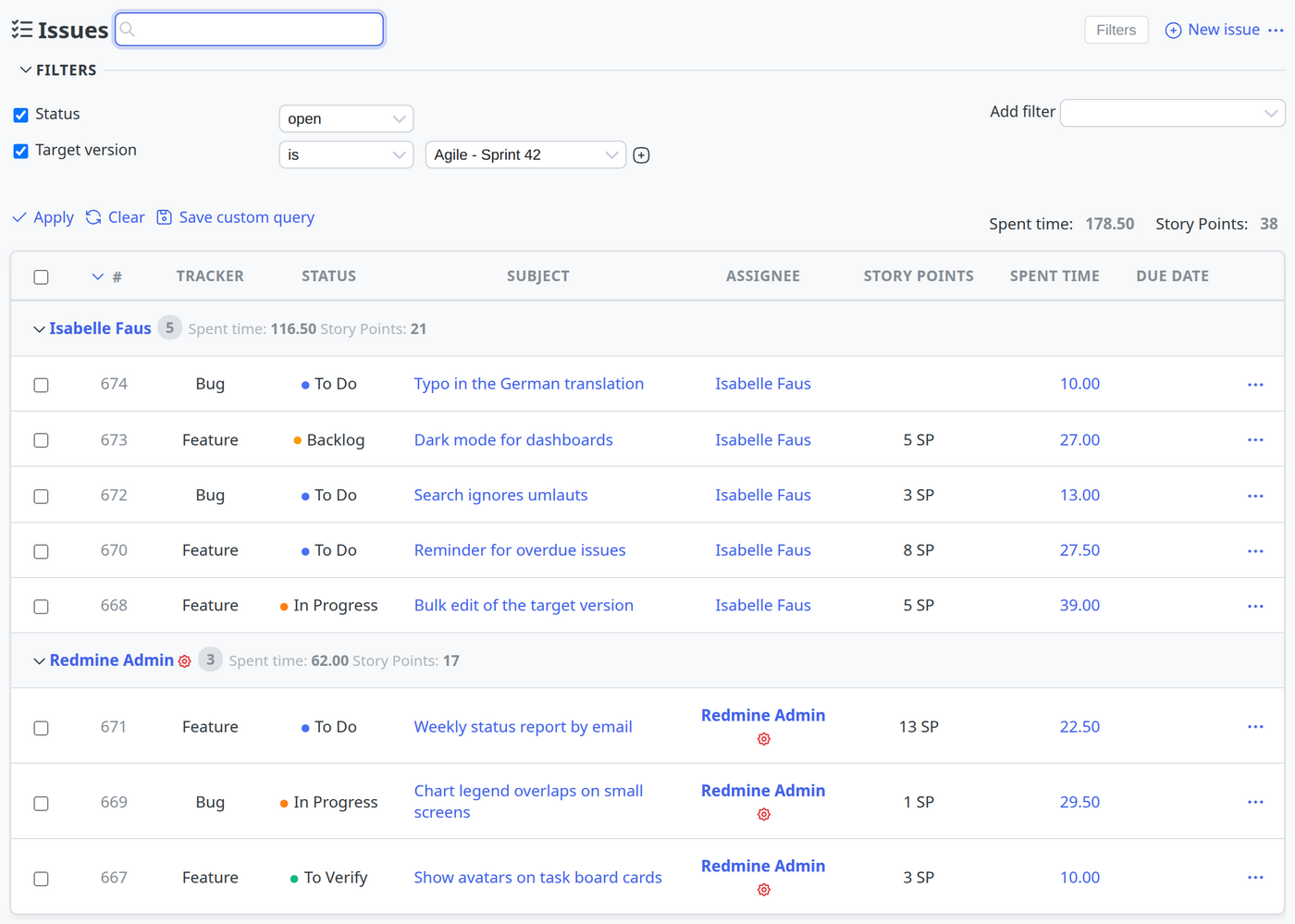
Improved Redmine issue list
The Redmine issue list shows all issues of a project or across projects. The Reporting plugin adds columns such as cost, issue lifetime, due date deviation or the number of files. Totals appear above the list and in every group. For story points, the plugin brings the field format "Number list" from version 4.7.0.
From version 4.7.0 you can also group by parent issue and show the subtasks as a linked list. Instead of the list you can choose a board, a treemap or a view of the issue dependencies.
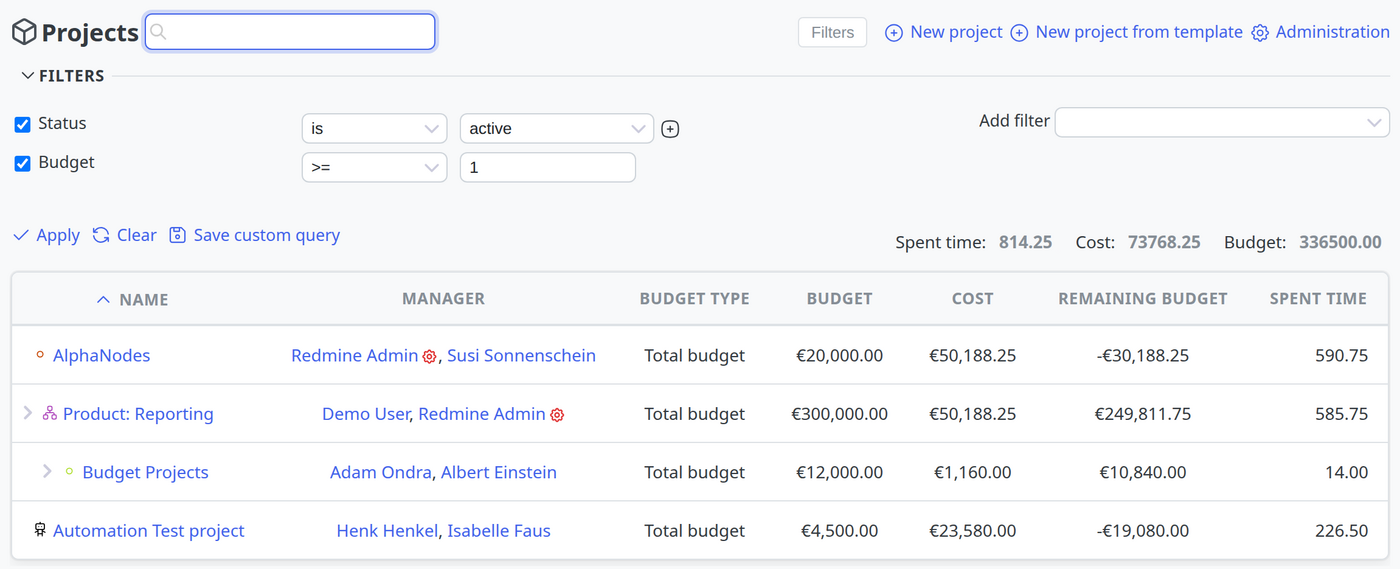
Improved Redmine project list
The project list can show budget, cost, remaining budget and spent time per project, with totals across all projects. The plugin calculates the cost from the hourly rates of your team. A budget can be a total budget, monthly, quarterly, yearly, hour-based or day-based. Roles define who sees budgets and hourly rates.
Further display options are board, roadmap, flowchart, Sankey diagram and treemaps.
Good to know
Everyone sees only their figures
Charts and totals only count issues, time entries and projects the viewer is allowed to see.
Dashboards for roles
Dashboards can be shared with selected roles, for example management, the project team or support.
Export
Export lists as CSV and PDF, many of them also as XLSX, for example for the monthly report.
Same block in all plugins
HRM, ServiceDesk, DB, Passwords and DevOps bring the same chart block for their own data.
All display options at a glance Burndown charts
Buy Reporting Plugin v4.6.0
Affordable prices regardless of your team size