Managed Hosting / Redmine Products / Redmine Automation Plugin (Automate and optimize)
Automate Redmine with if-then rules, without a line of code
Status requests, follow-ups, the same maintenance ticket every month: around 60% of a knowledge worker's time goes into coordination instead of the actual work. The Redmine Automation Plugin takes that part over.
Study: Asana Anatomy of Work
Sound familiar?
- You create the same issues by hand every month.
- You keep chasing because nothing comes back from the customer or the team.
- Issues are left lying because nobody notices how long they have been open.
- Follow-ups live in a calendar or on a sticky note instead of in Redmine.
If you recognise yourself in one of these points, the Automation Plugin can take over exactly that part.
How a rule works
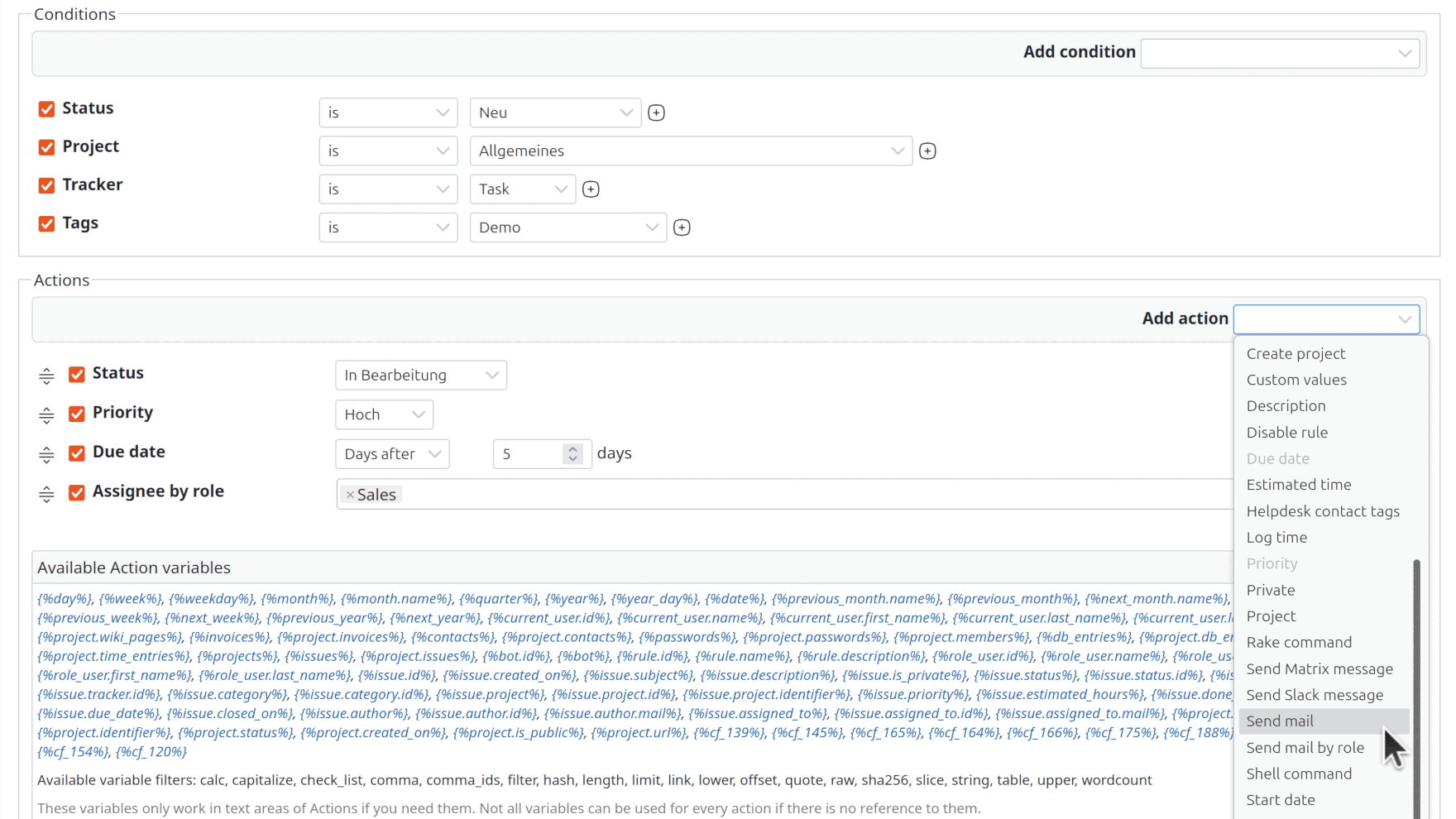
Every rule consists of a trigger, a condition and an action. An example from support: an issue is waiting for the customer, and nothing more comes back.

- Trigger
An event or a schedule, for example every night. - Condition
The same filters as in the issue list: status "Waiting for customer", not updated for 14 days. - Action
The plugin closes the issue and informs the customer by email. - Result
The list stays clean without anyone having to chase. Every change is recorded in the issue history.
Rules are created in Redmine by someone with administrator rights. To get started there are ready-made templates that you only need to switch on or adjust.
What teams automate with it
Six examples from everyday work. Included templates help you get started, and you can add your own rules without developer knowledge.
Recurring issues
The maintenance ticket arrives every month on its own, with assignee and due date.
Follow-ups
An issue comes back on the agreed day instead of disappearing in the list.
Clean up what is left lying
Close inactive issues after a deadline or report them to the team lead.
Log time
Recurring time entries, for meetings for example, are created by the plugin itself.
Data protection
Anonymise personal data in line with the GDPR, for example after someone leaves.
For advanced users: Webhooks for CI/CD and monitoring · Shell and Ansible commands · Rake commands · Variable filters to calculate and format · Status changes via commit keywords (with the DevOps Plugin) · all triggers and actions
Even more with AI
With the Redmine AI Plugin you get AI actions on top: classify, prioritise and assign issues by their content, not just by keywords. Whether and how AI can be added later without compromising data protection is shown by the decision tool in three questions.
Why it pays off
No programming skills
Conditions are the same filters as in the issue list, including custom fields.
Several actions per rule
For issues, projects and time entries, triggered by an event or a schedule.
Works with all AlphaNodes plugins
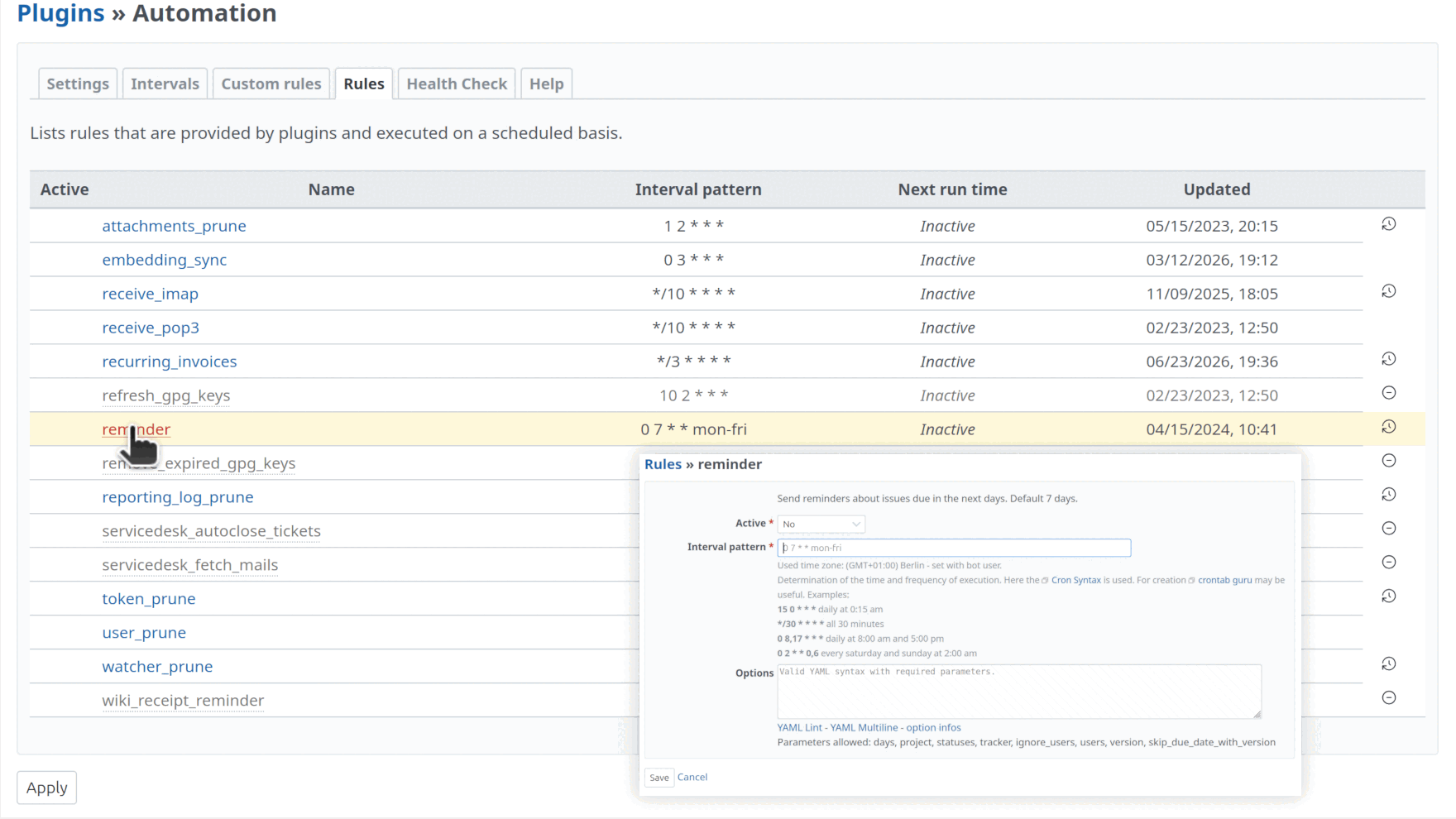
Other plugins add more triggers and actions. It is based on the Reporting Plugin.
Support in English and German
If you have questions, our team helps you directly.
Good to know for your IT
Clean-up rules
Three clean-up rules are ready to use and can be switched on and off one by one, for outdated content and never activated user accounts, for example.
Health check
A check address for your monitoring reports whether database, cache, email and the plugins are fine.
Examples from practice All options at a glance Buyers Guide (PDF)
Buy Automation Plugin v4.6.0
Affordable prices regardless of your team size
1 Does not run stand-alone. Requires Redmine Reporting.